





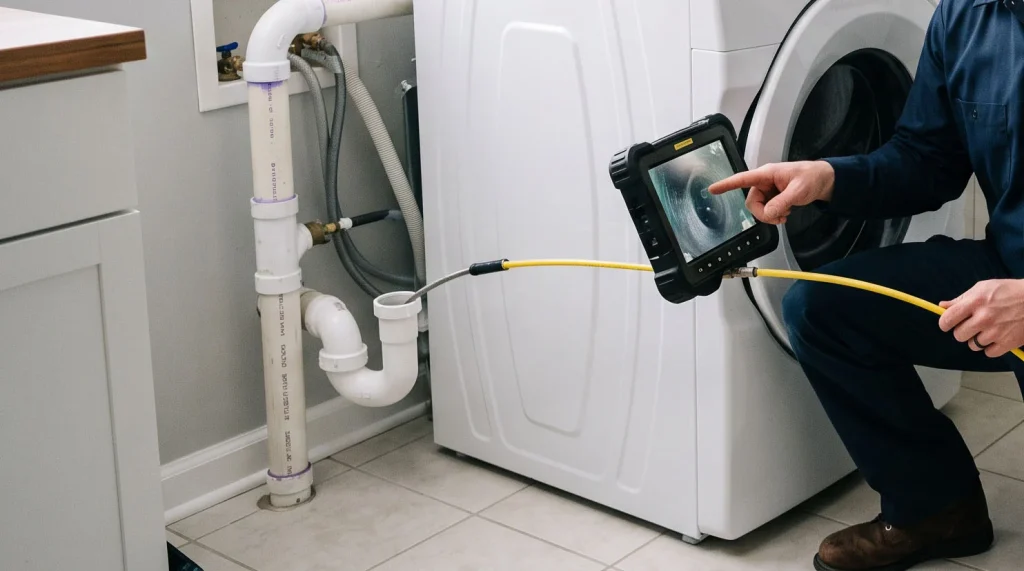
When a washer finishes and the utility sink bubbles, or a basement floor drain looks damp, timing matters!
In metro Milwaukee, laundry drains release a high volume of water into lower-level plumbing that may already be under strain from freezes, thaws, storms, aging laterals, and wet basement conditions.
Wisconsin sees roughly 30 to 40 thunderstorm days each year, making seasonal drainage stress a real local concern. In older city homes, inner-ring suburbs, lake-adjacent communities, and commercial buildings, a slow laundry drain may be the first warning sign that the main drain or sewer line is losing capacity.
How a Laundry Drain Can Reveal a Main Sewer Line Problem
Your laundry area shows trouble early because it sends heavy bursts of water into the drain system.
The washer may not be the problem
A washer can drain slowly because of a kinked hose, clogged hose, blocked pump filter, unbalanced load, or appliance issue. If the machine leaves clothes soaked but no floor drain, toilet, tub, or sink reacts, the first clue may be inside the appliance.
The warning changes when the washer pumps water and another fixture responds. Gurgling from a toilet, bubbling in a nearby sink, wetness at a floor drain, or water rising in a basement drain points beyond the washer.
A main line issue affects more than one fixture
Your plumbing drains connect like branches feeding a trunk. When the trunk narrows, washer discharge can expose the restriction before a bathroom sink does. A single slow laundry tub may fit a local clog.
More than one slow drain, repeated gurgling, or lower-level backup suggests a deeper path. Persistent symptoms may call for drain cleaning instead of repeated plunging.
What the Main Line Is Telling You
Patterns matter more than one symptom, especially when water moves between fixtures.
High-volume discharge is testing the line
A washer pushes water out in a short cycle, which tests whether the pipe can carry flow away quickly. If the main line is narrowed by grease, wipes, roots, scale, settled debris, or a defect in an older lateral, that surge can outrun the available opening.
Water in a utility sink during spin, a burping basement drain, or a glugging toilet means air and water are competing for space inside the drainage path.
Lower-level drains show pressure first
Basement and slab-level drains are usually the lowest openings in the building. If wastewater cannot move outward, it finds the nearest low point. Laundry rooms, basement baths, utility rooms, and lower-level commercial spaces become early warning zones.
Wetness near a basement floor drain after laundry, repeated slow drainage at more than one fixture, and clogs that return after basic clearing can point toward roots inside a lateral or main drain path. This is especially relevant where spring root intrusion can cause blocked drains.
Seasonal Pressures That Make Slow Laundry Drains Worse
The same pipe can act differently as weather and heavy use change the load on the system.
Winter cold can turn one problem into two
Winter deep-freeze conditions create different plumbing stress. Frozen pipes, burst pipes, water heater failures, and boiler trouble can overlap with drainage problems in the same lower level. A slow drain does not cause a burst pipe, but both can turn a utility room into a cleanup problem quickly.
Avoid open flames near frozen piping, and do not ignore damp wall areas or water spreading near appliances.
Spring and summer water add outside pressure
Spring snowmelt, rain, and summer thunderstorms can add groundwater and runoff pressure around older laterals, especially when sump pumps cannot keep up. Wisconsin sees an average of 30 to 40 thunderstorm days a year, and the peak severe-thunderstorm season runs from April into August.
Where combined sewer infrastructure exists, heavy rain can matter more. That does not make every slow drain a public sewer issue, but storm timing still belongs in the diagnosis.
Grease, wipes, and laundry debris narrow the path
A main line usually clogs by accumulation, not surprise. Grease cools and sticks to pipe walls. Wipes and hygiene products can catch at joints. Lint, hair, soap film, and debris add to the load.
For more context on how grease, wipes, and spring rain trigger main line clogs, focus on the pattern before the backup.
Immediate Response Priorities
Your first steps should reduce flow, protect people, and help identify whether this is local or system-wide.
Stop adding water to the system
- If laundry water backs up into a floor drain, utility sink, tub, or toilet, stop the washer if you can do so safely.
- Do not run another rinse cycle to test it.
- Avoid flushing toilets, running dishwashers, taking long showers, or starting more laundry until you know whether the main line is moving water.
Check the pattern. Does the issue happen only during laundry? Does a toilet gurgle? Does a basement drain smell like sewage? Do other lower-level fixtures react?
Protect people before property
- Do not step into standing water if electrical equipment or appliances may be involved.
- Keep people and pets away from wet lower-level areas.
- If the water looks or smells like sewage, treat the situation as more than a mop-up job.
When slow laundry drainage is paired with sewage odor, multiple fixtures reacting together, a basement floor drain rising, or water entering occupied space, use sewer backup solutions or get 24/7 emergency plumbing support. Describe what happened first, what fixtures reacted, whether rain was occurring, and what the water touched.
Decide whether to monitor or escalate
Monitoring may be reasonable when one laundry sink drains slowly once, the washer hose is visibly kinked, and no other fixture reacts. Escalation makes sense when the problem repeats, involves more than one fixture, appears during rain, creates sewage odor, or affects a rental, business, or finished basement.
The same caution applies to gurgling basement floor drains. Noise, odor, and slow flow together usually mean the drain system is asking for attention before water appears.
Repair Decisions and Prevention Habits
The right response depends on source, spread, recurrence, and contamination risk.
Drain cleaning or blocked drain removal may fit when the issue is a clog, buildup, or restricted drain path. For commercial properties, it may reduce disruption to tenants, staff, customers, storage areas, or operations.
Plumbing repair and cleanup are related but different. If water backs up into a basement, utility room, or occupied commercial space, the damage path matters. Clean-water leaks and sewage backups require different caution levels.
- Use lint control where appropriate, avoid washing heavy debris into the system, and keep grease out of sinks.
- Do not flush wipes, hygiene products, paper towels, or cleaning cloths.
- In managed properties, document the first fixture affected, timing, weather, odors, and water path.
Guidance on seasonal water damage restoration and repair can help you think through source control, drying decisions, and what water touched. A slow laundry drain is not always an emergency, but it is rarely meaningless when it repeats.
Frequently Asked Questions
1. Can a slow laundry drain mean the main line is clogged?
Yes, especially when the laundry drain slows along with other fixtures. If a toilet gurgles, a floor drain gets wet, or a tub reacts during the washer cycle, the issue may be downstream. One slow sink can be local, but multiple symptoms usually deserve closer attention.
2. How can you tell if the washer is the problem instead?
Look for appliance-only symptoms first. If the washer stops mid-cycle, leaves clothes soaked, or has a visible hose issue without any plumbing reaction nearby, the appliance may be involved.
If other drains respond when the washer empties, the building drain path becomes more likely.
3. Why does the laundry area show main line trouble early?
A washer releases water quickly, so it tests the drain line harder than a slow faucet. If the main drain is partially restricted, the washer’s discharge may reveal it through bubbling, gurgling, or backup. Lower-level laundry rooms also sit close to the points where backup pressure appears first.
4. Is a basement floor drain backup during laundry serious?
It can be. A damp floor drain after a laundry cycle may mean the line is struggling to move water away. If the water returns, smells foul, or appears with other slow fixtures, treat it as a possible main drain or sewer warning.
5. What should you do first if the laundry water backs up?
- Stop the washer if you can do so safely.
- Avoid adding more water through toilets, showers, dishwashers, or another laundry cycle.
- Keep people and pets away from wet areas until you know whether electricity or wastewater is involved.
6. Why do slow laundry drains get worse after rain?
Rain and snowmelt can add pressure around older laterals and lower-level drainage paths.
If water enters through defects, roots, or overloaded drainage conditions, the system has less room for normal indoor flow. That is why a drain that seemed only slow can become a backup during wet weather.
7. Can frozen pipes and slow drains be connected?
They are different problems, but they can overlap in the same utility area. Cold weather can create supply-side risks such as frozen or burst pipes, while lower-level drains may already be slow. When both occur near laundry rooms, water damage decisions can become more urgent.
8. What commonly causes recurring main line clogs?
Common contributors include roots, grease, wipes, hygiene products, lint, soap film, scale, debris, and aging laterals. The clog may build slowly before it creates a visible backup.
Repeated symptoms after basic clearing usually mean the cause deserves more than a quick reset.
9. Should you use a chemical drain cleaner for a slow laundry drain?
Avoid relying on chemicals when more than one fixture is reacting. Chemical products may not reach or resolve a deeper main line restriction, and repeated use can create other concerns.
A pattern involving gurgling, odors, or floor drain wetness needs a more careful diagnosis.
10. What changes if the backup involves sewage odor?
Sewage odor raises the caution level. Do not treat foul water like a simple clean-water spill, especially if it reaches flooring, storage, walls, or occupied areas. Limit contact, stop water use, and focus on source control before cleanup decisions.
11. How should commercial or managed properties respond?
- Document the first affected fixture, time of day, weather, odor, water path, and affected rooms or units.
- Stop unnecessary water use in the affected area and protect tenants, staff, customers, and stored materials.
- Fast documentation helps separate appliance issues from main drain, sewer, sump, or storm-related problems.
Related Posts:
- How to Tackle Water Damage Repair in Older Homes
- Why End-of-Summer Drain Cleaning Matters Before Fall…
- Downspout Connections and Basement Backups in Older…
- Why July Rain Turns Root Intrusion Into a Backup
- Summer Storms & Sewer Backflow: Why Lower Fixtures Flood?
- Patio Crowds, Restroom Clogs, and Plumbing Risks
- Storm Season Utility Room Checks for Condo Associations